
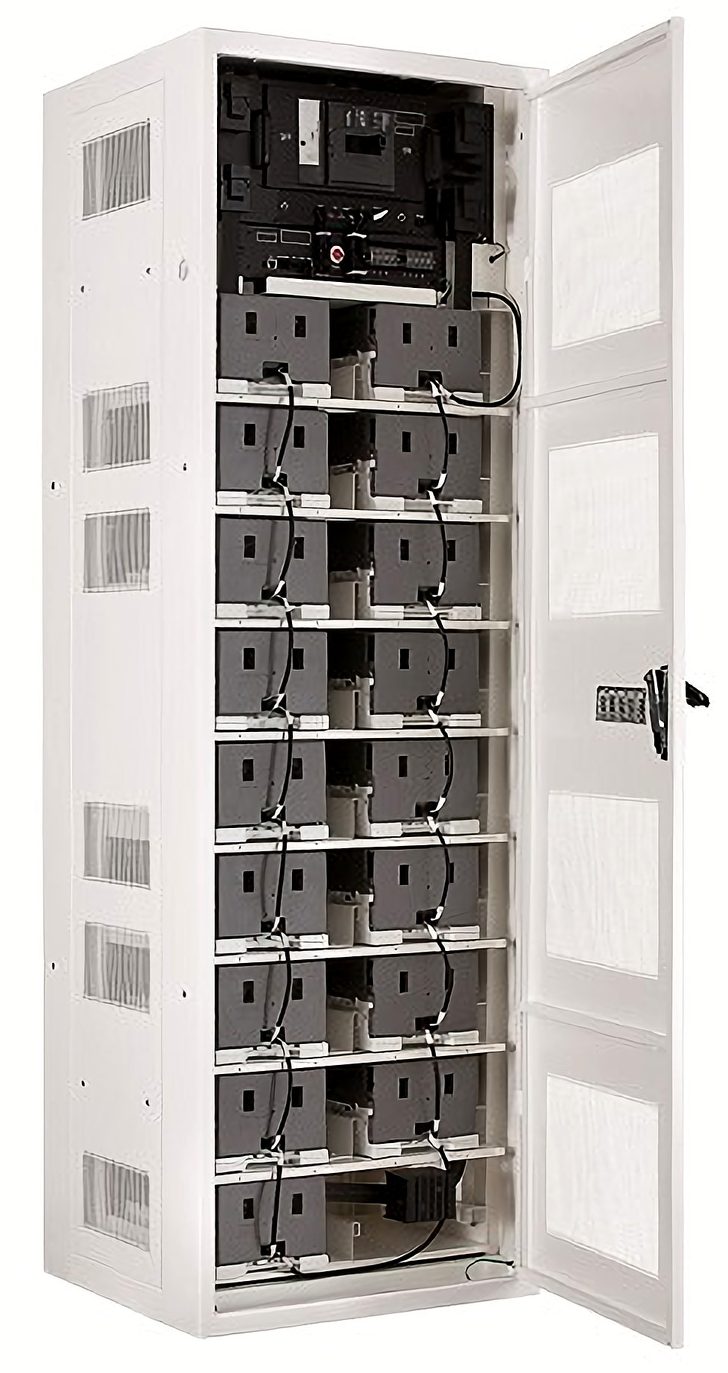
 The safety concerns about lithium-ion UPS batteries are based on the wrong chemistry comparison. The TCO math rarely stops at the upfront price. Power Solutions breaks down what IT directors and facilities teams actually need to know before choosing between VRLA and Li-Ion.
By Molly Gross, Principal, Power Solutions, LLC
VRLA batteries typically need replacing two to three times over a 10-year UPS lifecycle — each event bringing service costs, maintenance windows, and risk to live critical infrastructure. This whitepaper covers the full Li-Ion vs. VRLA decision for Schneider Electric UPS systems — total cost of ownership, the chemistry facts behind Li-Ion safety concerns, when extended runtime changes the TCO calculus, retrofitting existing VRLA installations, sustainability considerations, and an honest look at nickel-zinc as an alternative. Power Solutions is an APC Elite Partner and vendor-neutral advisor. Download this free guide for a clear-eyed comparison.
Whitepaper Summary
Q: Is Li-Ion actually cheaper than VRLA over the life of a UPS?
A: For most standard-runtime applications, yes. VRLA’s 3–5 year service life means two to three replacement cycles over a 10-year UPS lifecycle, while Li-Ion typically lasts the full 10 years with no mid-cycle replacement — the single largest driver of its lower total cost of ownership.
Q: How much space does Li-Ion save?
A: Li-Ion battery cabinets are typically 30–50% smaller and about 60% lighter than equivalent VRLA configurations. In co-location and space-constrained facilities, that reclaimed floor space has a direct dollar value.
Q: Are Li-Ion UPS batteries actually safe?
A: Yes. Schneider Electric UPS batteries use chemistries selected for stability and service life: NMC in the Galaxy and Smart-UPS Ultra/Modular Ultra lines and LFP in Smart-UPS Lithium-Ion models. Both are more thermally stable than the lithium cobalt oxide behind most consumer-electronics incidents. Every battery is protected by a multi-layered battery management system, and Galaxy UPS systems
paired with Schneider Electric Galaxy Lithium-ion battery cabinets are offered as UL 9540 energy storage systems. Schneider Electric reports more than 500,000 Li-ion UPS units deployed with no reported safety incidents.
Q: Are Li-Ion UPS batteries allowed in places with strict fire codes, like New York City and California?
A: Yes. Neither prohibits them, but both regulate lithium-ion energy storage, including UPS batteries, through their fire and building codes and require listed, tested equipment. See our white paper, Lithium-Ion Battery Safety in UPS Applications: Facts vs. Fiction, for details.
Q: Does Li-Ion always win the TCO comparison?
A: No. For sites with extended runtime requirements — long enough that the battery string must be significantly larger — VRLA may remain competitive or favorable. A site-specific analysis is the appropriate tool for that decision.
Q: Can I retrofit an existing VRLA installation with Li-Ion?
A: Often, yes — if the UPS platform supports it and has significant remaining service life. Retrofit compatibility depends on UPS firmware and battery management interface, not just physical form factor, and should be confirmed before planning. Power Solutions can confirm compatibility for your specific UPS model and firmware.
Q: Is nickel-zinc a viable alternative to Li-Ion?
A: NiZn has real advantages — no lithium, strong recyclability, favorable thermal stability — but Schneider Electric has not authorized NiZn batteries for use with their UPS platforms, which affects warranty, service agreements, and EcoStruxure IT integration.
Q: How do I get help deciding between VRLA and Li-Ion for my facility?
A: Power Solutions, LLC provides battery health assessments, Li-Ion TCO analysis, retrofit compatibility reviews, and compliance documentation support for the full Schneider Electric UPS portfolio.
Download this whitepaper.