
 By Margaret Gross, Principal, Power Solutions, LLC
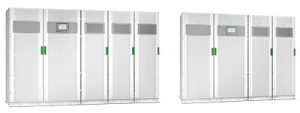
If you’re responsible for three-phase power protection, you’ve probably heard the Galaxy VS, VL, and VX discussed as though they’re versions of the same thing. They’re not. They’re distinct platforms designed for different environments, and specifying the wrong one creates problems that compound over time — either you’ve over-built and paid for capacity you’ll never use, or you’ve under-built and have no path to grow without replacing your base infrastructure.
Here’s a practical breakdown of how to think about the decision.
Start with load, end with architecture
The load range makes the initial cut straightforward. The Galaxy VS covers 10–150 kVA and is the right choice for most mid-size data centers, distributed facilities, and infrastructure refresh projects. The Galaxy VL handles 200–500 kVA and is designed for large data centers where capacity needs to grow incrementally without replacing the base frame. The Galaxy VX covers 500–1,500 kVA and adds ECOnversion mode — which achieves up to 99% efficiency while keeping the inverter active — making it the right platform when energy efficiency at scale is a measurable operational priority.
All three operate in double-conversion mode, which means transfer time is zero. That’s not a marketing claim — it’s an architectural fact. The load runs on inverter-derived power continuously, so there is no switching event when utility power fails. For clinical systems, transaction processing infrastructure, and any application where a momentary interruption has downstream consequences, this is the specification that matters most.
The battery decision has changed
All three models support both VRLA and Li-Ion batteries, and for most new installations and replacements today, Li-Ion is the better choice. The service life argument alone is compelling — 8–10 years versus 3–5 for VRLA, which eliminates a full replacement cycle over a typical 10-year UPS life. The integrated BMS monitors each cell continuously, so you’re not relying on periodic discharge tests to tell you whether your batteries actually have the capacity their nameplate claims.
The footprint argument is equally important and frequently underweighted. Li-Ion battery cabinets are approximately 50% smaller than equivalent VRLA configurations. In a data center, that recovered floor space isn’t just a convenience — it’s productive capacity that can support revenue-generating equipment. In colocation environments where space is priced per kW or per cabinet, the value is explicit. In enterprise data centers, it defers or avoids the capital cost of expansion. That opportunity cost belongs in any honest TCO comparison.
One more reason to pay attention to monitoring
All three Galaxy models integrate with EcoStruxure IT, which provides remote visibility into load levels, battery health, and event history across all installations from a single interface. For organizations managing multiple facilities, that aggregated view is operationally significant — it replaces per-site monitoring systems and surfaces predictive alerts before they become failures. For facilities teams carrying compliance documentation requirements, it also provides the service records and maintenance history that auditors ask for.
The full version of this article covers each model in detail — selection criteria, operational characteristics, the complete Li-Ion vs. VRLA analysis, and a decision framework for matching your load and architecture requirements to the right platform. Read the full guide here.